Loosener
Do you go blind and gaga over all the numbers thrown at you in the name of health statistics? Beware. This work on spurious calculations found that the number of films Niclas Cage appeared in inversely correlates with helicopter accidents killing occupants that year. Go figure.
Spinal Cord May 2014
368 The title makes it obvious this has to be from a Scandinavian database- “50 years follow-up on plasma creatinine levels after spinal cord injury”. Pulling out data of 119 persons with SCI, from as long back as 1945, the Danish authors conclude “The findings of this study support that p-creatinine is a poor detector of early renal deterioration, and until new tests like Cystatin C are further evaluated we recommend Cr-EDTA clearance as the gold standard in monitoring renal function in patients with SCI”. Though not by formal testing, we too found indicators of uselessness with blanket testing of creatinine in our annual SCI follow-up event attended by over 200 persons. Check creatinine only if there is specific suspicion of significant renal dysfunction.
400 This article from Toronto on Spinal Cord Essentials claims to be a qualitative+ semiquantitative one. The Canadian authors talk about their initiative to provide a comprehensive set of patient information leaflets that would be tailored to individual needs during and after the course of rehabilitation. And they’re free to download. Excellent. I sampled a couple of them, and I’m jealous. We are for long stuck at a much preliminary stage of hand-out preparations; I’m hopeful, though. As the popular jewellery ad concludes, hope is everything.
Archives of PMR, March 2014
506 A multidisciplinary team of co-authors from Alabama have reported the use of MRI Diffusion Tension Imaging to visualize what has long been suspected in motor recovery following stroke. “CorticoSpinal Tract disruption predicts the level of motor deficit, but not the response to Constraint-Induced therapy rehabilitation… suggests that the neural mechanisms critical for …recovery of motor function after damage to the CNS may differ substantially from the neural substrates that are critically involved in motor function before CNS damage”. “These findings emphasize the importance of a neural network consisting of bilateral sensorimotor cortices and hippocampus for response to CI therapy after damage to the CST, presumably acting as a neural compensatory mechanism”. Lesson: do not give up even if you see a bad MRI. Give at least one good trial targeting functional improvements. There are invisible compensatory mechanisms that could work.
515 Thesis alert. “Unrestricted educational grant from Allergan” in the conflicts section adds a bit of salt to the findings of this study which compared clinical (Modified Ashworth and Tardeau scales) and instrumented (surface EMG, torque) assessments of spasticity before and after Botox injections. As expected, clinical assessments did not predict response to Botox. What is interesting is that Instrumented assessment did. “In general, muscles with higher pathologic electromyography activation at baseline tended to be good responders and vice versa.” “…baseline RMS electromyography showed the highest sensitivity to identify responders. Conversely, the MAS and MTS have no predictive ability”. It would be worth testing the utility of such EMG based tools in predicting response to different intervention modalities – casting, motor point injections, nerve blocks etc. Currently, we have none.
562 Thesis alert. An example of how not to interpret the effectiveness of an intervention. This systematic review on Comparative Effectiveness of Platelet-Rich Plasma Injections for Treating Knee Joint Cartilage Degenerative Pathology has included all the right type of figures and tables, but loses its credibility because it makes tall claims based on results pooled from very poor quality studies. Of the 16 included studies, there was just one study that used a control group (that received saline injections). Lesson: If logistics could be worked out, a properly done double blinded RCT is indicated and should be possible.
Archives of PMR, April 2014
642 Our own paper! Survival analysis of 490 persons with spinal cord injury in our follow-up area. 86% survival after 5 years, 58% after 25 years. The follow-up data over such a long period is very good for a private tertiary care hospital in India. Survival outcomes are good for a developing country, could be better. One major limitation was that we could not add a social context because of the lack of a denominator- total number of SCIs in the population under study over this period. That, for now, is beyond the scope of our institution.
Practice tid-bits
- What type of exercises should be advised in knee osteoarthritis? This systematic review suggests focusing on “improving aerobic capacity, quadriceps muscle strength or lower extremity performance.” Supervised, three times a week seems to help better. The best part is, “Such programs have similar effect regardless of patient characteristics, including radiographic severity and baseline pain”.
- Should Botox be injected only at specific points along muscles? This RCT says it doesn’t matter whether the injection is given at the so-called motor points at 20-30% length from origin, or way down below the middle of the gastrocs muscle in persons with stroke.
- Do you ever ask persons referred to you with early RA about their smoking status? Probably should, as this trial says that in addition to previously described predictors erosions, ESR/CRP, “current smoking status is a strong predictor of radiographic progression in early rheumatoid arthritis”.
- Do you regularly prescribe a concoction of vitamin supplements to those with elevated homocysteine levels, hoping to reduce the risk for cardiovascular events? This Cochrane Review updated last year found that “homocysteine-lowering interventions compared with placebo did not significantly affect non-fatal or fatal myocardial infarction, stroke or death by any cause”. And concluded “This updated Cochrane review found no evidence to suggest that homocysteine-lowering interventions in the form of supplements of vitamins B6, B9 or B12 given alone or in combination should be used for preventing cardiovascular events.” I’m sure we’ll remain indifferent to such findings and continue to boost the sales of vitamin supplements.
- Do you ever ask female patients whether they have stress incontinence? You probably should, irrespective of what condition they present to you with. Not just patients, stress incontinence could be as common as 1 in 3 women aged 35-55. And the humble, do-it-anywhere pelvic floor exercises afford a definite and significant improvement in symptoms and quality of life, says this recently updated Cochrane review. For a better perspective, do read this no-nonsense post by a therapist. In your practice, remember to ask, and prescribe pelvic floor muscle training.
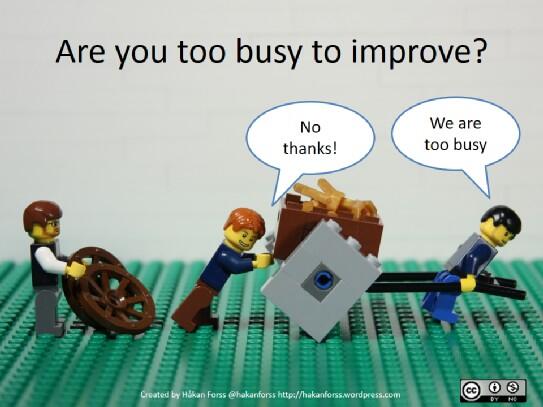
From twitter: Busy does not always mean productive.
 Rehab Journal Review
Do we need indicators of uselessness !! We love to throw our hats down on seeing someone do that in front of us! Wonder how many of us have realized that the majority of the creat values in melas are much less than our labs normal range!!!!
Anybody asked why so far ?
Hope cannot be killed ! What was I was taught ! Need more Parbhu s in our field!
Denominators, wish we had!
Registries, electronic documentation and uploading data from each institutions at least if not from govt or larger bodies should work on this at least IAPMR level to get some credible data.
Any kind of regular exercises will help in OA provide it’s done in early stages of the disease it self , was interesting to know that gate control theory of pain applies here , suppression pain with increase in motor neuron activity
Rohit has written from Canada “Spinal cord page 400- the team which published the article on developing ‘spinal cord essentials’ works at Lyndhurst. They meet on a regular basis and could convert the various topics into a single binder with the help of a donor and getting professional help to design the binder. In turn, the back cover of this attractive binder mentions ‘ this undertaking was made possible by generous donations made by mr.x'”