Category Archives: Journal Reviews

Rehab Journal Review: April 2015

BMJ Blogs, 15 April 2015

Are you into pimping? More likely you are if you teach. Do read this blogpost on why asking unanswerable questions is no longer the in thing.

BMJ, 31 March 2015

Is paracetamol effective in reducing pain in people with low back pain, or osteoarthritis hip/knee? This meta-analysis with high quality evidence says it is NOT, and suggest revision of treatment guidelines to replace paracetamol with other effective medications.

Archives of PMR, April 2015

614 Is transurethral Botox injection to the sphincter feasible/effective in reducing detrusor sphincter dyssynergy? The Chinese authors got a grant, they could have done a clinical trial but chose to do a descriptive study. #inexplicable. Whose responsibility is it anyway to check if a study quality is worth the money and resources? Trialists, funders, institutional review boards, journal editors, manuscript reviewers are all culprits.

Supplement- S145 Transcranial magnetic stimulation: a magnetic field is applied to the head, and is help repair a few damaged nerves in brain and spinal cord. MARVEL stuff. Just that there isn’t enough, as yet, to suggest transcranial magnetic stimulation actually brings about nerve improvements following spinal cord injury, says this review article.

The April supplement of Archives focuses on such Non-invasive brain stimulation in neurorehabilitation. All “promising” stuff, nothing known to really make a difference.

PLOS, 22 April 2015

Brandishing traditional graphical illustrations in thesis is a die hard tradition. “Beyond Bar and Line Graphs” is a review article. From more than 700 published physiology articles, the authors found most used inaccurate illustrations. They plead researchers to use scatter plots, box plots, histograms to accurately represent continuous data (weight, height, temperature, force…)

JAMA Internal Medicine, April 2015

This hits you hard in the face. In the US, more than 10000 nursing home residents with peripheral arterial disease underwent lower extremity revascularization surgery between 2005 and 2009. Among them, “…few are alive and ambulatory 1 year after surgery. Most who were still alive had gained little, if any, function”. The authors do point out there could have been short term gains (pain relief). Notwithstanding, this is a tale reflecting our times, of how trigger-happy we’ve become. Unmindful of the larger picture.

Still in the habit of starting antibiotics just-in-case in patients with aspiration pneumonitis? You might be causing more harm. This case scenario article in the “less is more” series urges restraint, and differentiating pneumonitis from pneumonia.

***

Liked on twitter

Sometimes #peerreview turns a manuscript into a frankenpaper.

Rehab Journal Review- March 2015

.

JAMA Internal Medicine, 30 March 2015

“An apple a day DOES NOT keep the doctor away” concluded this observational study from the US ‘Association between apple consumption and physician visits‘. The authors collected data from a cross-sectional survey of non-institutionalized people. Among other questions, the participants were asked if they eat at least one apple a day. Though the apple-eaters did not seem to have significant advantages over non-eaters in terms of avoiding doctor visits or hospitalizations, “apple eaters… remained marginally more successful at avoiding prescription medications”. Seems our ancestors were not completely off the mark.

Statistics learning point: “Association” mentioned in this study is NOT to be confused with “causation”.

.

Cochrane Library, 12 March 2015

Cholesterol reducing statin group of drugs is a manufacturer’s delight. Except for the fact that there is no solid evidence to show they actually help reduce incidence of endpoints that matter- stroke and heart attack, they score most other check-boxes for the manufacturers:

1. Sell world-wide. No racial, regional limitation.

2. A day’s dose doesn’t cost much (just over Rs.4). Good chance people would continue to use.

3. Almost everyone beyond 40 years of age is now a potential buyer (for the rest of the life), thanks to “routine health check-ups” even for asymptomatic people.

4. It is easy to show efficacy in improving a surrogate end-point (cholesterol levels), to an extent that a Cochrane review ‘Lipid lowering efficacy of atorvastatin‘ updated this month “significantly increases the strength of the evidence… that atorvastatin decreases blood total cholesterol and LDL-cholesterol in… the commonly prescribed dose range. …Atorvastatin is more than three-fold LESS potent than rosuvastatin“. That last statement is likely to expedite the end of atorvastatin era, and the beginning of rosuvastatin era. Yet, the authors rightly point out that the “review update does not provide a good estimate of the incidence of harms associated with atorvastatin because included trials were of short duration and adverse effects were not reported in 37% of placebo-controlled trials”. We might never know the truth.

.

.

Archives of Physical Medicine & Rehabilitation, March 2015

381 Epidural steroid injections don’t work; but they work. That’s the sort of self-contradictory conclusion from the authors of this Dutch pragmatic randomized trial “Epidural steroids for lumbosacral radicular syndrome“. When compared to “no-injection”, steroid injections seemed to do NO BETTER in reducing pain, but in a queer way resulted in better functioning and productivity, as assessed by SF-36. It is worth remembering that the productivity benefits were in Netherlands which is among the better places to live, and cannot be extrapolated to other countries.

Learning point: 1. if you plan to inject your patient with the aim of reducing pain, think twice, you might be causing more harm than benefit. 2. Read why pragmatic trials are pragmatic

.

.

Spinal Cord, March 2015

209 There is no consensus on whether catheters could be reused for clean intermittent catheterization. Most manufacturers caution you to throw them off after single use. Authors of this cross-over trial in Malaysia have found that “reuse of CIC catheters for up to 3 weeks in children with neurogenic bladders…does not increase the incidence of symptomatic UTI“. That’s confirmation of what we’ve been practicing for long. Just need to check how far we could push the bar. The authors should have mentioned the type of catheter used at their center; it matters.

.

***

Liked on twitter: Illustrative analogy for how our governments cook-up healthcare target achievement reports

policy based evidence making


Tagged , , , , ,

Rehab Journal Review: February 2015

BMJ, 24 February 2015

“Irrational drug prescribing, kickbacks for referrals, and unnecessary investigations & surgical procedures” – testimonies from 78 doctors on the malaise afflicting India’s private healthcare system are part of a book written by Dr Arun Gadre. This commentary in BMJ titled “India’s private healthcare sector treats patients as revenue generators” gives an indication to the extent, intensity and the near-inevitability of these practices. Clichéd, but Shankar-KamalHassan were spot on in describing why it would be difficult to stem the rot. Dishonesty is so omnipresent, that we as a society have stooped low enough to accept it as a virtue. The state, the big brother who’s supposed to watch over, itself is the perpetrator. How else to explain government medical colleges juggling teaching faculty and movable infrastructure in the name of “deputation” to falsely get through MCI inspections. Coming back… the author of this article does suggest ” the only solution for India would be accountable social regulation of the private medical sector and the movement towards a combination of social insurance and a tax based system for universal healthcare”. Amen.

Annals of Internal Medicine, February 2015

Nutritional advice to patients with pressure ulcers have more similarities to MS Dhoni’s decisions on-field than James Watt’s energy calculations. Impromptu, I-believe-in-my-logic decisions that wouldn’t count as science. This blinded randomized trial “A Nutritional formula enriched with Arginine, Zinc and Antioxidants for the healing of pressure ulcers” tries to make sense of the issue. 200 patients recruited from 7 centers. Great effort. But I can’t understand why they chose to end the study at 8 weeks, instead of waiting until complete healing of ulcers, which is what matters. For what it’s worth, supplementation did seem to help. Needs work though. #thesisalert

NEJM, 11 February 2015

Acute stroke management with thrombolysis is a mixed bag. Recent systematic reviews could not make up their mind on the specifics or on whether benefits clearly outweighed the risks. This new RCT on “Rapid Endovascular Treatment of Ischmic Stroke” takes sides. In fact, the study had to be halted midway since the treatment was found to be definitely more beneficial than controls. The abstract conclusion, for a change, is well-worded, describing clearly the population to which the results could be extrapolated, and is grounded in facts “Among patients with acute ischemic stroke with a proximal vessel occlusion, a small infarct core, and moderate-to-good collateral circulation, rapid endovascular treatment improved functional outcomes and reduced mortality.”

JAMA, 27 Jan 2015

I’ve known healthcare professionals and patients who have blind immense faith on topical antimicrobials Povidone Iodine (Betadine) and Chlorhexidine, so much so that I won’t be surprised if they add a bit of the conspicuously colored fluid to their food. I wonder if this article “Chlorhexidine bathing and health care-associated infections” would make at least a dent in their belief. “…daily bathing with chlorhexidine DID NOT REDUCE the incidence of health care–associated infections including central line associated blood stream infections, catheter associated urinary tract infections, ventilator-associated pneumonia, or C difficile. These findings do not support daily bathing of critically ill patients with chlorhexidine”

From the mainstream media

My Own Life” is a #NYT article by Oliver Sacks, the neurologist author of the unmistakably titled book “The man who mistook his wife for a hat“. He says he has metastatic malignancy, and ponders aloud on the life he has lived. “I cannot pretend I am without fear. But my predominant feeling is one of gratitude. I have loved and been loved; I have been given much and I have given something in return; I have read and traveled and thought and written…Above all, I have been a sentient being, a thinking animal, on this beautiful planet, and that in itself has been an enormous privilege and adventure”. Sounds like words of a man who has made peace with life.

19sacks-superJumbo

***

Liked in twitter: Ben Goldacre at his usual irreverant best

Tagged , , , , , , , , , , , , , , , , ,

Rehab Journal Review: January 2015

Archives of Physical Medicine and Rehabilitation, January 2015

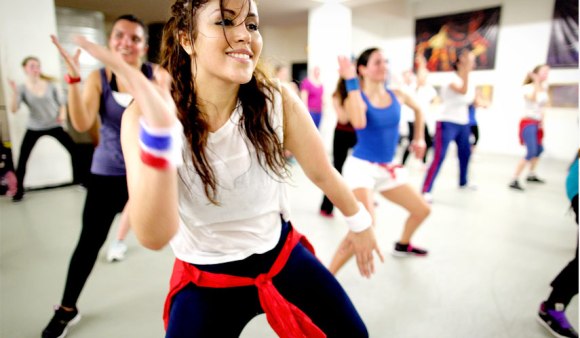
141  Dance- the oldest art form in the world, is not just an art anymore. Of late, dance is being reinvented in many ways, as calorie-burning frenzies of Zumbaaa, to treatment modalities attempting to retain some zing when age catches up with you in the form of Parkinson disease. This systematic review on Dance for people with Parkinson Disease found reasonably reliable preliminary evidence that people with mild to moderate disease  receiving once weekly dance sessions showed “improvements in balance, motor impairment and endurance”. As with most exercises, the type of dance didn’t matter. What better article to start the New Year cheerfully.

zumba

158 Rehabilitation professionals still do not communicate effectively about cognition. The title says it all. This was a survey involving 130 rehabilitation professionals in the US, including physiatrists, nurses, occupational therapists, physical therapists, psychologists, social workers, speech-language pathologists. And they all just did not consistently agree on what they would term as mild, moderate, severe cognitive deficits, or on the types of memory (long term, short term, remote, recent, immediate, working). I believe we’ll fare no better. We still are not clearly identifying vegetative state from minimally-conscious-state from emerging-from-MCS. When different professionals talk different languages, patients suffer. The authors have a couple of suggestions to address this issue: “,,, use of a table embedded within clinical patient assessment reports that clearly states the definition of these terms and interpretations of the measures used. Periodic retraining of staff in regard to these issues will be necessary given staff turnover”. Amen.

Spinal Cord, January 2015

36 Does regular standing improve bowel function in people with SCI? “No” says this randomized cross over trial. 6-week stand phase (30min per session on tilt-table, five times per week) and a 6-week no-stand phase separated by a 4-week washout period. Primary outcome was Time to First Stool. Why don’t we have more of such simple clinically relevant randomized studies.

78 What should you do to answer the million dollar question-whether catheters could be reused for clean intermittent catheterization? 1) Name the study after a Clint Eastwood movie whose theme music has been recycled in 498 Indian movies. Good. 2) Ask 61 athletes from 2012 London paralympics and 2013 paracycling world championships to fill a tick-box form. Not good enough. This survey data is rich in recall bias, and the authors cannot extrapolate information from this to emphatically state “catheter reuse is intimately linked to UTI frequency”. One good prospective, randomized trial might settle this issue. PG thesis, anyone?

International Journal of Epidemiology, January 2015

OL Master Health check-ups, such a waste of resources. IMMENSE waste. Ionnidis, who is as prolific in churning out papers on burning issues as Charlie Hebdo is in enlisting enemies, is at it again. Does screening for disease save lives in asymptomatic adults? This systematic review of meta-analyses and randomized trials says “No”. “Among currently available screening tests for diseases where death is a common outcome, reductions in disease-specific mortality are uncommon and reductions in all-cause mortality are very rare or non-existent.” Which means, it is time to read about lead-time-bias if you did not know already.

From the mainstream media

Amartya Sen goads us to dream the affordable dream of Universal Healthcare in his ‘The Guardian’ article. Sen argues why it makes sense for the state to provide healthcare for all even with seemingly empty coffers. “Plenty of evidence that not only does universal healthcare powerfully enhance the health of people, its rewards go well beyond health.” Let’s try and listen to him. The man has won some good silverware in money matters, he can’t be too wrong.

Liked on twitter: “Remember that patients’ time is a resource too” – from the ever resourceful Sir Muir Gray

Tagged , , , , , , , ,

Rehab Journal Review: December 2014

Festivities all around, let’s have some fun! See if you can dodge the doosra’s.

BMJ, Christmas 2014

GI featured article, Page 1  Cakes, chocolates, cheese, milk, meat- I’m being fed on sumptuous servings of these the past 10 days. Not wanting to know the truth about the inevitable, I’ve not checked my weight of late. To all my worldwide accomplices in the year-end indulgence, this article might be of interest. When somebody loses weight, where does the fat go? Check if you’ve thought about the possibilities.

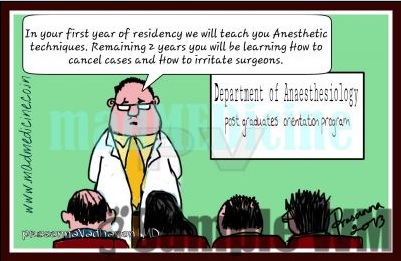
Surgery featured article, Page 1 The war between the anesthetists and surgeons is further fueled by this article Operating theater time, where does it all go? by concluding “anesthetists are the worst specialty group when predicting how much time they will require to complete an operation or procedure”. According to an anesthetist who was one year senior to me during my graduation days, they’re actually trained in such techniques (see illustration- courtesy his website madmedicine.co.in)

anesthesia.image

Social Media

Blog: Rectal Tone of Anesthesiologists Varies with Patients’ Oxygen Saturation– claims this article, whose author is planning on scientific validation of his findings by doing a rat study. (Disclaimer: I have no grudge against anesthesiologists. Articles are mentioned in this blog purely on the basis of their scientific merits or demerits. The latter, mostly)

LinkedIn: List of 10 TED talks that (could potentially) change healthcare. Do watch them at leisure.

Twitter: This tweet provided the link to Dr Sashi Tharoor’s speech at the 2014 graduation day, CMC Vellore. This is for the benefit of those not invited to the ceremony (that would be more than 90% of us working in the institution)

Best of the year

Mother of all mockeries: Dr.Ketan Desai, the corruption tainted former president of MCI, is the president elect to the World Medical Association. If you didn’t know, WMA is the vanguard of the Declaration of Helsinki, which is THE guiding document on Ethical Practices in medical research…snap. ‘Ketan Desai’ + ‘Ethical’: is there a better oxymoron?

Future-is-here: 3D printed prostheses for mass production, hardware printed in space by sending an email from earth. Yesterday the BMJ ran an editorial on how 3D printing could affect clinical practice. This is no longer science fiction. 5 years from now, much of our Prosthetic and Orthotic fabrication process could be in the form of quick, customized 3D prints. Let’s wind-up with this tinge of optimism.

***

From among the blizzard of season’s greetings, my favorite from a friend: “Every moment is sacred, nature has no calendars”. Every serene moment of this year’s white Christmas exemplified this!

white christmas1

Tagged , ,

Rehab Journal Review- November 2014

Archives of PMR, November 2014

2000 One from our own stable. VS Ramachandran (have you watched his TED Talk?) was among the first to study the scientific basis of mirror therapy. And this is what my colleagues have found in a pilot randomized study-  “Mirror therapy enhances motor performance in the paretic upper limb after stroke“. The editors have chosen this among their featured articles and freed it from behind the pay-wall! The next step? We need to do an adequately powered RCT, perhaps with occupational outcomes as measures of effectiveness. And, we’d be hearing lots more about the first author, Sam. #yhihf

2120 Osseointegrated prosthesis is the artificial leg that is fixed to the bone of the amputated limb. Despite its seemingly obvious advantages, this observational study from Sweden does report a few cons, including persistent phantom pain. Is this study design appropriate to know if this method of prosthesis fitting is better than traditional sockets? I don’t think so.

2167 Is anterior AFO useful in stroke patients walking? This Taiwanese paper goes all out to say yes. Isn’t the glaring hole in the PICO of this study obvious?

Spinal Cord, November 2014

809 Platelet RIch Plasma application for stage 4 pressure ulcers– this Indian study finds its place in the Nature-published Spinal Cord journal despite its methodological limitations. Lets wait for a good RCT.

NEJM, November 20, 2014

Finally, gene therapy as a technique delivers. Not just theoretical empty promises but sustained, significant, appreciable clinical benefits to persons with a disease that has no cure otherwise. This Phase 1 clinical trial, for a change (much welcome), is a non-commercial hemophilia treatment trial, with no dubious drug industry influence!!!

P: Persons with Severe Hemophilia B

I: single IV injection of viral vector mediated gene therapy

C: none (phase 1 study)

O: >90% reduction in bleeding episodes and factor requirement, as a result of factor levels improving from ‘severe’ to ‘moderate’ ranges. Effects maintained  upto 3 years, no major side-effects, observations ongoing. Very promising!

Ethical question: though only preliminary, with such possibly robust benefits, is it OK to go ahead with a placebo-controlled phase 2 trial to confirm efficacy?

Practice tidbits

  • Do costlier catheters mean better health outcomes in short-term catheterized individuals in hospitals? “No”, says this Cochrane revietew (Sep 2014) that evaluated silver alloy-coated catheters and antibiotic impregnated catheters.
  • Should you be pragmatic and choose worldly-wise career options, or pursue your dreams come-what-may? The later perhaps. This list of Top-10 regrets by those about to die makes thought-provoking reading. Especially for those at career cross-roads as I’m in.

***

Liked on twitter: “ get all scientists to report and interpret bloody p values properly”

“Every step into the unknown is a risk” 

Rehab Journal Review: October 2014

Archives of PMR, October 2014

1810 Does home therapy with telerehabilitation improve shoulder pain related symptoms in wheelchair users with SCI? Do NOT read this paper to know the answer because they’ve done only a ‘before-after’ study, from which nothing useful can be inferred. Such (and many) interventions need an RCT design to prove usefulness. Should a placebo controlled RCT be done for Ebola vaccine too, in these crisis times? Yes but No. If keen to know how, read this

1838 Can MRI findings in acute brain injury predict which patients would later progress to a level of high functional walking? “No” was the inference from this longitudinal followup study of 65 persons with brain injury in Norway.

1903 I’m not a fan of using questionnaires as key outcome measures in clinical conditions. And I’m glad with the findings of this Spanish study. The authors evaluated whether questionnaires filled by persons with fibromyalgia to report their activity levels corroborated with actual activity recorded on the accelerometer carried by them for a week. “The (questionnaires) and the accelerometer differ greatly when assessing physical activity… Therefore, the self-administered (questionnaires) show questionable usefulness…to assess physical activity in fibromyalgia.”


Experitemental Eye Research, November 2014
Never believe a health news from any non-scientific media, my resolve is stronger now. “Viagra linked to blindness” cried out a prominently placed Google news item. Along with a tell-tale photo of a man who is apparently blind.
Since we routinely prescribe Sildenafil in SCI rehabilitation, I was intrigued and chased the link to the source journal article.
1. It was a report of an animal study,not humans.
2. Rats with mutations in Retinitis Pigmentosa gene,when given Sildenafil, showed reversible impairments in electroretinograms. They didn’t become blind.

Lesson: Never believe a health news from any non-scientific media.


Cell transplantation, October 2014

Lots of noise made by a BBC feature about a research that claims near miraculous improvement in one patient with spinal cord injury after receiving olfactory ensheathing cells treatment. The cells were taken directory from the olfactory bulb in the brain (contrast from cells derived from the nose reported in previous studies) and supplemented with a nerve graft across the injured spinal cord. Points to note: authors themselves indicate this is just a proof of concept study, and say “The results …are very encouraging, but have to be
confirmed in a larger group of patients…”. Lesson: Promising- yes. Euphoria- no. Let’s wait.

If in doubt, please read the original article (not media reports) Functional regeneration of supraspinal connections in a patient with transected spinal cord following transplantation of bulbar olfactory ensheathing cells with peripheral nerve bridging. It’s open access.

Practice tidbits

Are heparin-flushes worth the money? Cochrane review December 2013: “We found no conclusive evidence of important differences when heparin intermittent flushing was compared with 0.9% normal saline flushing for central venous catheter maintenance in terms of efficacy or safety. As heparin is more expensive than normal saline, our findings challenge its continued use in CVC flushing outside the context of clinical trials.”

Are electrical modalities useful in shoulder  adhesive capsulitis? Cochrane Review May 2014: Low level laser has low level evidence that it could reduce pain for upto 1 month and improve functions for upto 4 months. No other modality has any reliable evidence.

If you’re having removal of lower wisdom tooth, should you take paracetamol or Ibuprofen for pain relief? Cochrane Review December 2013:  “There is high quality evidence that ibuprofen is superior to paracetamol at doses of 200 mg to 512mg…The novel combination drug is showing encouraging results when compared to the single drugs.”

***

Liked on twitter: “Integrity in research is like virginity- you can only lose it once” (Source: Twitter)

Tagged , , ,

Rehab Journal Review: September 2014

PLOS One, August 2014

‘Did you read my sms thoughts?’ could be a reality sometime in future.  And the future might already be partly here. “Conscious Brain-to-Brain Communication in Humans Using Non-Invasive Technologies” sounds like a plot that could have been straight out of a James Cameron script book. 1) “Thoughts” from a person in Thiruvananthapuram, India, were recorded by surface EEG electrodes, 2) transferred via internet to France, 3) where they were “conveyed” to 3 people via Transcranial Magnetic Stimulation 4)  and they interpreted them!!! Already received extensive media coverage though almost none referenced the original article. Immense potential for persons with communication impairments. Immense potential for ethical quagmire.

Scandinavian Journal of Medicine & Science in Sports, Sep 2014

When a BMJ blog exclaims “Plantar fasciitis- important new research”, adding “an exciting new paper that is the first of its kind and represents a new treatment approach” I thought somebody has found a solution to the problem. The original paper  though was disappointing. The authors had compared high-load strength training against usual care of shoe inserts and stretches. Primary outcome of pain related symptoms were not different in both groups at 1 month, 6 months and 12 months. None of the secondary outcomes showed benefit with the new intervention. Yet, the authors conclude that their study “adds new evidence for the positive effect of a simple, progressive exercise protocol for (plantar fasciitis)”. Lessons: 1) In “conclusions”, state facts as they are. Not the way you want them to be. 2) It’s not dishonorable to report a negative study 3) do not go by authors’ conclusions, make your own from their tables and figures. 4) Do not be swayed by high regard for Scandinavian research or BMJ.

In the last month’s review, I’d promised a gift to anyone who could identify the glaring mistakes in another article on plantar fasciitis. There was just one response, and Abhita got it right. Cheers (finally, somebody responds).

Spinal Cord, September 2014

667 We’re getting closer to thanksgiving and having more than a fair share of Turkey this month. “Can spinal cord injury patients show a worsening in ASIA impairment scale classification despite actually having neurological improvement?” ask the Turkish authors before they launch their criticism on the limitations of ASIA Impairment Scale (AIS) Classification. The case examples they argue on are not uncommon, but that does not fully justify the article. We need to remember that the AIS has its advantages in allowing for a quick clinical survey, and that the Scale has never been a comprehensive assessment tool. Nothing beats a logical, complete neurological examination. We’ve had instances of post-graduate students found wanting in final exams if they fail to think beyond AIS.  “We’re getting addicted to methods, in the process forgetting basic things that we’re supposed to do”- said Dr. Pathmeswaran, a soft spoken public health Professor from Sri Lanka in his speech at the Hyderabad Cochrane Colloquium last week. How true.

693 Can abdominal massage administered by a electromechanical device reduce chronic constipation and other bowel problems in SCI? The Dutch authors found that the answer was ‘No’. Perhaps it was an oversimplification of the neurological issue to a mechanical one?

697 Acute abdomen in a person with high SCI has the potential to send you on a wild goose chase. Guarding & rigidity, the classical signs without which the surgeon would refuse to enter the OR, would be absent. Imaging studies would be as helpful as the search operations for the missing Malaysian Airlines plane. Risk to life could be very high, as we realized the hard way in one particular instance I remember.  This Turkish single center chart review study reports an incidence of about 4% (n=9) of acute abdominal emergencies in their cohort of 237 persons with SCI over five years. Gall bladder disease was the commonest cause. High clinical suspicion is warranted when there are subtle symptoms of unexplained gastroparesis and fever.

Practice tidbits

Liked in News

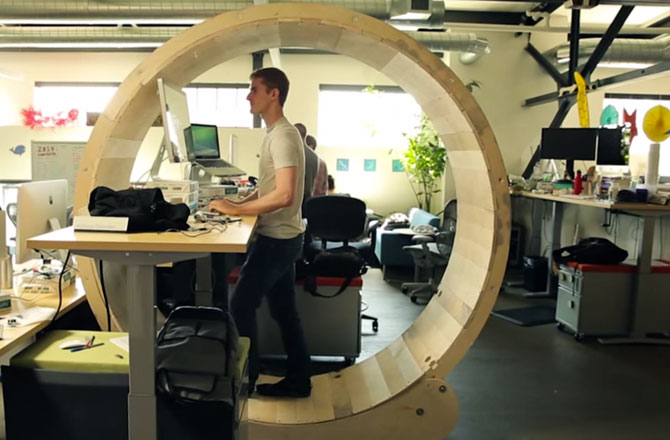
Workout while you work. One more of those why-didn’t-I-think-of-that innovations, the human hamster wheel might just set things in motion, literally, for the movement against ‘inactivity at workplace’.

dnews-files-2014-09-human-hamster-wheel-turns-up-670-jpg

Source: new.discovery.com

Tagged , , , , , , ,

Rehab Journal Review: August 2014

Spinal Cord, August 2014

629  Clinical researchers in general share a belief of being the torchbearers of the spirit of scientific enquiry. At times, this leads to a tendency to get so consumed with Mission Science that we miss the woods for the trees. And end up being just a pain in the a**e (literally, in this instance). That’ s the feeling I got reading this paper on Melatonin supplementation for sleep disturbance following cervical spinal cord injury. The following parameters were being studied during polysomnography (PSG) using contraptions attached to the patients as they tried to sleep in spite of the researchers’ best efforts- “central electroencephalography, bilateral electro-oculography, electromyography (chin, diaphragmatic), electrocardiography, blood oxygen saturation, nasal pressure, leg movements, body position and respiratory movements (chest and abdomen)”. And then the big OMG parameter “A rectal thermoresistor-measured core body temperature during the PSG.” I had visions of Guantanamo Bay. That’s where it snaps. I understand the logic, best objective outcomes and all that. But, I do not agree to the design where sleep quality is studied by torturing people with wires head to toes, in addition to shoving a piece of instrument up their bottoms. Not all that is technically possible is necessary, or humanly desirable. I know my opinions don’t count, but doesn’t it make better sense to first make it conducive for people to sleep by taking off all the wires, and then use just a self-reported sleep quality outcome tool? What matters more than subjective judgments for sleep quality? Ironically, all the objective recordings notwithstanding, the authors conclude “Melatonin improved subjective sleep with participants reporting faster sleep initiation, having longer sleep duration and improved psychological well-being”. Does melatonin work better in subcontinental conditions in a better designed study? Potential PG thesis topic.

646 For those who hold a generalized prejudice about women in Islamic countries, time to wake up. This month, Maryam Mirzakhani, a Persian mathematician working in the US, became the first ever female winner of the prestigious Field’s medal, the highest prize in Mathematics. And then, this study on Sexual dysfunction in women with SCI- a study from Iran. The results of this descriptive study are similar to those from other parts of the world, that women with SCI do have significant dysfunction in multiple aspects of their sexual functioning. What might be surprising to many, though, was the statement “Of 118 eligible patients with SCI, 13 (11%) declined to participate because of discomfort over answering questions about sexual functioning”. I see only the positive side that almost 90% of women interviewed were willing answer, which seems an at/above par score for any country. The authors have tried to explain the 11% non-response as follows  “(this)  reflects the highly personal and private nature of sexual activity in Iran.”  Dear authors, your choice of words is funny, and strongly suggestive of a prejudiced view about sexual practices in the rest of the world. Please be assured that except perhaps at carnivals such as Mardi Gras and in certain types of private parties, sexual activity is still personal and private in many parts of the world, not just in Iran.

S24 I’m surprised Spinal Cord chose to publish a single case report of USG guided phenol block of obturator nerve for adductor spasticity. Did we miss out on reporting the scores of guided blocks that have become part of our routine practice?

S27 For the past many years, we have been using a Ferticare vibrator in the management of anejaculation following SCI. Placement of the diaphragm is usually over the frenulum or the dorsum. This case series promotes a new type of penile vibrator, whose name would not look out of place in the marvel universe. The fork shape of the Viberect-X3 appears to provide added zing by simultaneously stimulating the frenulum and the dorsum . I’m not sure if the claimed advantage of sandwiching is really significant, since the reported success rates of 77% do not seem to add much to what is already possible. Moreover, unlike the Ferticare product, amplitude and frequency in this new product seem to be non-adjustible.


Archives of PMR, August 2014

1585 Plantar fasciitis is one of those conditions which could be as troublesome to the treating team as to the patients. In some, everything could fail to achieve symptom relief- medications, footwear modifications, injections, surgery. This systematic review on utility of extracorporeal shockwave therapy in plantar fasciitis has reported its surprisingly positive findings in Cochrane-like tables and illustrations. “…efficacy of low-intensity ESWT is worthy of recognition. The short-term pain relief and functional outcomes of this treatment are satisfactory”- a tall claim. If true, we should start using ECSW. But, apart from the odd title of the article that makes no grammatical sense to me in spite of repeated reading, there are other glaring errors, either in the published illustrations or in my understanding. Competition alert! Those who point out either or both correctly would receive a personalized gift.


JAMA, August 2014

799 One of the most significant impacts of technology on us over the past couple of decades has been the decentralization and simplification of key processes on a mass scale. Carry a phone anywhere, print a document at home, get cash anytime from ATMs without going to banks during workhours, book Indian train ticket from anywhere, share with friends personal status updates  in a few seconds from anywhere including space. None of this was commonplace 20 years ago.  ‘Power to the patients’ is a logical extension of such technological advancements. This UK study on “Effect of Self-monitoring and Medication Self-titration on Systolic Blood Pressure in Hypertensive Patients” spectacularly concludes “self-monitoring with self-titration of antihypertensive medication compared with usual care resulted in lower systolic blood pressure at 12 months”. Self titration resulted in a systolic BP that was lesser by almost 10mmHg. I am among those who believe routine blood pressure monitoring at the population level should be delinked from clinics and hospitals, provided we have the right type of evidence. In addition to monitoring, delinking titration of medication too is one step ahead. This changes nothing as yet, with just the surrogate outcome measurement of BP recording at 1 year reported in this study. Long term followup to evaluate benefits/harms in terms of change (or the lack of it) in morbidity and mortality trends, could give us the correct picture.


In spite of examples such as a placebo controlled trial in management of cardiac arrest,  I realized from a few reactions that clinical equipoise and the ethics of placebo controls have not been understood and/or accepted by a few of you. I would keep repeating until somebody shoots me. When there exists a true uncertainty about benefits or harms from an intervention, it IS ethical to study it irrespective of whether it is the standard of care or not. Any intervention that does not have conclusive, cumulative scientific evidence in its favor can be contested by a placebo in a properly designed trial. Dr.Trisha Greenhalgh, best-selling author and academician, has a way of explaining things. I’ve expanded on it.  “If you have a cardiac arrest, you may get a ‘totally useless placebo’ – or ‘a totally useless (and potentially harmful) adrenaline shot’. We do not know for sure the benefits or harms of either intervention. If the situation arises, would you help us find the truth by participating in this study? The results of the study could lead to millions of people worldwide avoiding ineffective intervention in future”.

***

I’d be attending the Cochrane Colloquium 20-27 September 2014. A week full of discussions on different aspects of pragmatic evidence informed healthcare; could be toxic.

And very good at double-checking.

source: Buzzfeed


Tagged , , , , , , ,

Rehab Journal Review: July 2014

Journal of Neurosurgery, July 2014

‘A nose could grow in your back’, the creepy and till-recently unsubstantiated salvo that was used to deter people from falling prey to unscrupulous ‘stem cell treatments’ has become almost true. This is the first report of such an “occurrence of a spinal cord mass after olfactory mucosal cell transplantation in a patient with a spinal cord injury.” The tumor was excised, and its biopsy revealed “respiratory epithelium with underlying submucosal glands identical to that seen in normal nasal mucosa.” The lesson: please, let’s wait. Until “better understanding of how to control cell proliferation, survival, migration, and differentiation in the pathological environment to foresee or prevent uncontrolled or abnormal cell growth in human patients.” Thanks Prashanth, for sending the links.

Archives of PMR, July 2014

1289 South Indian film industry is turning back time. Once again, there are talented female actors who can sing well as well as they can act and dance. The recent hit Fy-Fy-Fy sung by actor Ramya Nambeesan is an example. Why did I go off-track? Because of this similar rhyming functional independence tool from the US for spinal cord injury, the SCI-Fi short form, which is claimed to have good good internal consistency, and minimal ceiling and floor effects. We could have a look at this, but we’ve just transitioned to SCIM-II.

Spinal Cord, July 2014

511 This review on use of catheters for clean intermittent catheterization raises more questions than providing answers. Should off-label reuse be encouraged? If yes, how frequently should the catheters be changed? How should they be cleaned/sterilized before each use? How should they be stored? Are hydrophilic self-lubricating catheters better than uncoated tubes for off-label use? What is the overall health economic benefit/liability of each option? It is a shame that in spite of the blanket encouragement for off-label re-use in our practice for more than 3 decades, we don’t have have answers to these questions, and continue based only on ‘belief’. Worse,  “off-label reuse is not supported by legal requirements in Europe or the United States, or in Australia or Canada”. Hunting for post-graduate thesis topics? Do consider these very relevant questions that need answers.

547 One more answer that is long pending: is pharmacological prophylaxis for thromboembolism necessary for everyone with acute spinal cord injury? Do benefits outweigh risks and costs? As I’d mentioned in an earlier post, in spite of the existence of this clinical equipoise, a study proposal from my colleagues was (wrongly) shot down by our institutional review board, judging that a placebo arm is unethical. Dr HS Chhabra has apparently had no such troubles in getting approval for this RCT comparing LMWH Vs ‘No treatment’ in acute SCI. There was no difference between the two arms in the incidence of symptomatic DVT or complications, though the control arm had more asymptomatic DVT, which is of uncertain clinical significance. Hmm… one more clinically relevant thesis topic, awaiting a samaritan.

Lancet, 24 July 2014

Online “Elementary” Holmes would have remarked if he’d read this article. The RCT, comparing paracetamol Vs placebo for low back pain, is an example for how a seemingly simple study could get primetime spotlight if 1) there is real clinical relevance (I’m itching to use that ‘equipoise’ word again) 2) the publisher or the author has  good media relations. Should we continue to use paracetamol? Of course, yes, because it is at least “as good as placebo“.

BMJ, July 2014

Is Dabigatran really that good? Surprise (er…should we really be?)! One more instance of a drug company that has suppressed trial data to improve income. Internal documents accessed through a lawsuit found that “Optimally used (=titrated) dabigatran has the potential to provide patients an even better efficacy and safety profile than fixed dose dabigatran and also a better safety and efficacy profile than a matched warfarin group”. But, “Boehringer Ingelheim, the maker of dabigatran, has failed to share with regulators information about the potential benefits of monitoring anticoagulant activity”, in order not to dilute the marketing USP- ‘use without testing INR’. Lesson for our practice: Do use Dabigatran, but with INR checks to titrate dose for better effectiveness and to reduce bleeding risks.

Practice tid-bits

***

Liked on twitter:

doughnut diet

Tagged , , , , , ,

Rehab Journal Review- June 2014

Spinal Cord, June 2014 Supplement

S5-6 ‘Wonder-drug that cures all diseases’- Sarvaroganivarani is a term which in many Indian languages means just that. Thanks to abundance of shrewd marketing by pharma and gullible people worldwide, there are two candidates that currently fit the ‘cure-all’ bill: vitamin D supplements and Botulinum toxin injections. In certain healthcare belief systems, these two drugs cure everything except probably cardiac arrest and HIV infection. So here goes one case report that claims Botulinum toxin significantly improved magnitude of intractable lower extremity neuropathic pain in a person with spinal cord injury. #YHIHF.


Spinal Cord, June 2014

472 Persons with spinal cord injury “spent 34.2% … of their acute hospital length of stay waiting for a Spine Rehabilitation Unit bed to become available.” No, that’s not the story in our institution. Surprisingly, it’s an article from Australia on process barriers for patients needing spinal rehabilitation. Better economy, sparser population, similar problems as here.


Archives of PMR, June 2014

1039 “Objective: To investigate short-term and long-term effects of repetitive peripheral magnetic stimulation (rpMS) on spasticity and motor function… Conclusions: Therapy with rpMS increases sensory function in patients with severe limb paresis.” This is an example of how NOT to write the conclusion of your study; here the objective was to study the motor system, but they inexplicably prioritize sensory system in the conclusion. Lesson: always write first about what you set out to find, not what you accidentally found. As in this instance, wayward conclusions are usually presented to camouflage the fact that the intervention was not effective in the outcomes that matter. “The magnetic stimulation, however, has limited effect on spasticity and no effect on motor function.”


1201 Robert Downey Jr continues to wow us with his fleet of remote voice-activated auto-assembling armored suits. Yet, a more elementary stuff, Functional Electrical Stimulation, is not commercially available for conditions other than foot drop. This American article on Implanted Neuroprosthesis for Restoring Arm and Hand Function reports that 2 persons with complete tetraplegia C4 or higher had improvement in hand functions that enabled them to perform a few daily activities. They used implantable muscle electrodes to stimulate muscles and spiral nerve cuff electrodes wrapped around the nerves to be stimulated. Implanted EMG electrodes in face/neck muscles were used to trigger the neuroprosthesis mediated limb movements. Fine. The question is, when can we order it on Amazon.in?


BMJ June 2014

Trisha Greenhalgh, the author of the bestseller How to read a paper, has generated quite a volume of online academic discussions with her article “Evidence based medicine: a movement in crisis?”. Do read this if you believe healthcare provision is an art that needs to be practiced as scientifically as possible. The author concurred when I wrote to her pointing out that the developing world perspective was ignored in the article.


Practice tidbits:

  • Unlike most of the newer medications in Rheumatology, moderate to high quality evidence of clinical benefit encourages continued use of Methotrexate in Rheumatoid arthritis. This review updated in June says about 16% discontinuations is to be expected due to adverse effects
  • Do you believe in “general health check-ups”? If yes, please do read this BMJ editorial ‘General health checks don’t work’ that reiterates something that’s palpable for quite some time: “Doctors should not offer general health checks to their patients, and governments should abstain from introducing health check programmes”

Perspective: Do read this engaging blog by Richard Smith on why healthcare professionals should try more to be human than to appear super-human all the time. And also this thought provoking article on How mistakes can save lives.


In the news: Doing rounds last month in a few magazines were reports that the UK healthcare system is the best in the world (the worst: US. India is probably too low to be ranked). Elsewhere, stories emerged of a serial sexual abuser in the UK who was never brought to justice, and in fact, was given administrative posts in healthcare management for years, which he utilized to sexually exploit more people. If such a top ranking healthcare system could not identify/act decisively to purge a scum from the system in time, there is no way we could expect ours to, if a situation arises. #sigh


Liked on twitter: “It is easier to help patients learn something than to help professionals unlearn wrong things.”- somebody

Rehab Journal Review- May 2014


Loosener

Do you go blind and gaga over all the numbers thrown at you in the name of health statistics? Beware. This work on spurious calculations found that the number of films Niclas Cage appeared in inversely correlates with helicopter accidents killing occupants that year. Go figure.


Spinal Cord May 2014

368 The title makes it obvious this has to be from a Scandinavian database- “50 years follow-up on plasma creatinine levels after spinal cord injury”. Pulling out data of 119 persons with SCI, from as long back as 1945, the Danish authors conclude “The findings of this study support that p-creatinine is a poor detector of early renal deterioration, and until new tests like Cystatin C are further evaluated we recommend Cr-EDTA clearance as the gold standard in monitoring renal function in patients with SCI”. Though not by formal testing, we too found indicators of uselessness with blanket testing of creatinine in our annual SCI follow-up event attended by over 200 persons. Check creatinine only if there is specific suspicion of significant renal dysfunction.


400 This article from Toronto on Spinal Cord Essentials claims to be a qualitative+ semiquantitative one. The Canadian authors talk about their initiative to provide a comprehensive set of patient information leaflets that would be tailored to individual needs during and after the course of rehabilitation. And they’re free to download. Excellent. I sampled a couple of them, and I’m jealous. We are for long stuck at a much preliminary stage of hand-out preparations; I’m hopeful, though. As the popular jewellery ad concludes, hope is everything.


Archives of PMR, March 2014

506 A multidisciplinary team of co-authors from Alabama have reported the use of MRI Diffusion Tension Imaging to visualize what has long been suspected in motor recovery following stroke. “CorticoSpinal Tract disruption predicts the level of motor deficit, but not the response to Constraint-Induced therapy rehabilitation… suggests that the neural mechanisms critical for …recovery of motor function after damage to the CNS may differ substantially from the neural substrates that are critically involved in motor function before CNS damage”. “These findings emphasize the importance of a neural network consisting of bilateral sensorimotor cortices and hippocampus for response to CI therapy after damage to the CST, presumably acting as a neural compensatory mechanism”. Lesson: do not give up even if you see a bad MRI. Give at least one good trial targeting functional improvements. There are invisible compensatory mechanisms that could work.


515 Thesis alert. “Unrestricted educational grant from Allergan” in the conflicts section adds a bit of salt to the findings of this study which compared clinical (Modified Ashworth and Tardeau scales) and instrumented (surface EMG, torque) assessments of spasticity before and after Botox injections. As expected, clinical assessments did not predict response to Botox. What is interesting is that Instrumented assessment did. “In general, muscles with higher pathologic electromyography activation at baseline tended to be good responders and vice versa.” “…baseline RMS electromyography showed the highest sensitivity to identify responders. Conversely, the MAS and MTS have no predictive ability”.  It would be worth testing the utility of such EMG based tools in predicting response to different intervention modalities – casting, motor point injections, nerve blocks etc. Currently, we have none.


562 Thesis alert. An example of how not to interpret the effectiveness of an intervention. This systematic review on Comparative Effectiveness of Platelet-Rich Plasma Injections for Treating Knee Joint Cartilage Degenerative Pathology has included all the right type of figures and tables, but loses its credibility because it makes tall claims based on results pooled from very poor quality studies. Of the 16 included studies, there was just one study that used a control group (that received saline injections). Lesson: If logistics could be worked out, a properly done double blinded RCT is indicated and should be possible.


Archives of PMR, April 2014

642 Our own paper! Survival analysis of 490 persons with spinal cord injury in our follow-up area. 86% survival after 5 years, 58% after 25 years. The follow-up data over such a long period is very good for a private tertiary care hospital in India. Survival outcomes are good for a developing country, could be better. One major limitation was that we could not add a social context because of the lack of a denominator- total number of SCIs in the population under study over this period. That, for now, is beyond the scope of our institution.


Practice tid-bits

  • What type of exercises should be advised in knee osteoarthritis? This systematic review suggests focusing on “improving aerobic capacity, quadriceps muscle strength or lower extremity performance.” Supervised, three times a week seems to help better. The best part is, “Such programs have similar effect regardless of patient characteristics, including radiographic severity and baseline pain”.
  • Should Botox be injected only at specific points along muscles? This RCT says it doesn’t matter whether the injection is given at the so-called motor points at 20-30% length from origin, or way down below the middle of the gastrocs muscle in persons with stroke.
  • Do you ever ask female patients whether they have stress incontinence? You probably should, irrespective of what condition they present to you with. Not just patients, stress incontinence could be as common as 1 in 3 women aged 35-55. And the humble, do-it-anywhere pelvic floor exercises afford a definite and significant improvement in symptoms and quality of life, says this recently updated Cochrane review. For a better perspective, do read this no-nonsense post by a therapist. In your practice, remember to ask, and prescribe pelvic floor muscle training.


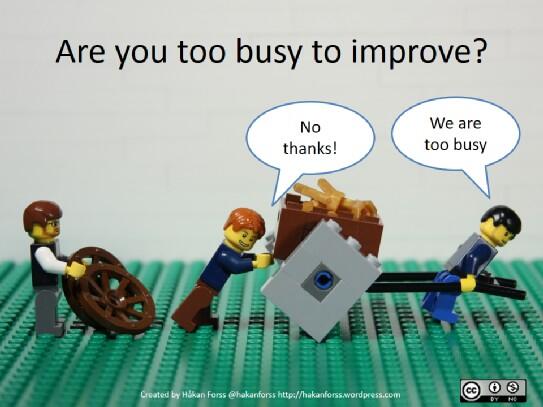
From twitter: Busy does not always mean productive.

Embedded image permalink

Tagged , , , , , , , , , , , , , , ,