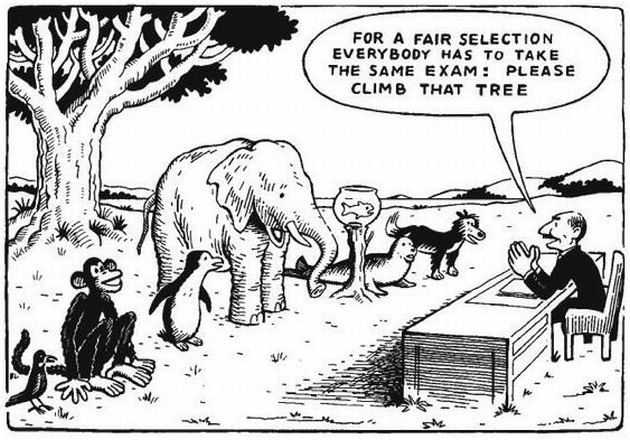
“Everybody is a genius. But if you judge a fish by its ability to climb a tree, it will live its whole life believing that it is stupid. What is your genius?”- Somebody
Is there a worse conflict-of-interest situation than that fires a majority of scientists, academicians, clinicians and researchers across the globe to publish research articles? I don’t think anything could beat the obscene and unscrupulous nexus between MSD, Srinivasan, BCCI and CSK.(1) The problem with the publication mania, though, is that it directly or indirectly affects every human being in the world.
For the perspective, I give you my own predicament. I am a clinician, and my primary job is clinical work. That means I need to see patients in the outpatient department, admit and manage those who need inpatient care, ensuring that as a doctor I do justice to all my patients in a manner that is as scientific as possible. So, what do you think would be the single most important metric that is used to assess my performance to grant me my promotion next year? Surprise! It’s not what I do to my patients. That is almost irrelevant in the current system of objective appraisals. I would get my promotion ONLY if I have at least one publication in a good scientific journal as a first or second author. And to get my next two promotions, I should have at least 6 publications in the next 7 years. I could be good, or pathetic, with my patients. What matters though is the ‘count‘ of the publications I have. That’s right. Not the quality or impact, but the numbers. It’s a shame that is the way many like me would be assessed, but THAT is the rule. Do read the opening sentence again to see who is for company.
Almost every decision made by doctors in treating illnesses is supposed to be based on research findings. It therefore becomes crucial to consider every research article in light of this coercive professionalism, where many publish not because they have something to publish, but because they have to publish something. ‘Publish or perish’, is the terminator-esque phrase used to refer to this academic pressure. And it is this one factor that leads people to conduct and publish research on things unlikely to contribute to a better healthcare. When the choice is between what is easy and what is right, it is difficult for many to forego the first option. Big pharma influencing, often not legitimately, every aspect of research, marketing and sales, and regulators turning a blind eye to everything that is happening only adds to the seemingly utter wretchedness of the scenario. (2) I don’t believe things are actually as bad as what a prominent researcher says in a heavily cited ‘research on research’ article: Why Most Published Research Findings Are False.(3) It may not be the 90% that he claims, but even a conservative estimate of 25% of bad research findings would mean that a significant number of treatments in the world are not scientific enough. In this age, it is no less than criminal negligence. Unfortunately, most people uninvolved in this business are either ignorant or indifferent to the issue.
So, how do we actually get to know what treatment works and what not? Or, whether an intervention causes more good than harm in the balance? Thankfully, in these troubled waters, in an attempt to ensure that we fall not to individual indiscretions but to collective ones, there is a consensus system to rate the strength of available scientific evidence. The table can be found here as given in the website of the Center for Evidence Based Medicine.(4) Translating to human parlance, at the risk of oversimplification, in the order of strongest to worst scientific evidence, bet your life on it if it is a properly done:
- Systematic Review
As the name suggests, systematically analyzing all previously done good quality studies evaluating one particular treatment
- Randomized controlled trial.
Abbreviated as RCT, this is the best study design in general to evaluate the efficacy of an intervention. Every new intervention is studied in different phases. Phases 0 and 1 just test the waters. Phase 2 studies are the ones that actually check if the treatment is effective or not. If yes, Phase 3 studies are done to fine tune dosing and side-effect profile, and then the intervention is marketed pending regulator approvals. It might be worth noting that none of the so-called stem cell treatments have so far gone beyond phase 1 or 2, but they do get published. And get trumpeted as if they are beyond phase 3 and ready for marketing.
- Case controlled study or Cohort study (when it is not possible or ethical to do an RCT)
Now for the bad ones. Put your money elsewhere if it is a
- Case series or case report.
- Expert opinion. This includes ‘opinions’ from an esteemed scientist, your professor, favorite doctor, best-selling book author, magazine columnist, vociferous blogger, peer, friend, spouse, me- personal opinions are the least dependable, and are considered next to nothing in terms of scientific evidence. Unscientifically clustered personal opinions of many people are no better either, not unlike democracy that often facilitates unanimity of choice that beggars belief.
In the backdrop of professional compulsions, technical complexities of doing good quality research, and big pharma corrupting whatever they can to sell their products, throw into the mix mainstream media willing to stoop however low to grab a share of followers and ratings to boost their earnings, you have the picture complete. Attention-mongering headlines, at times absurd, might be catchy, with nothing more to them in reality. Need a sample? BBC News – Stroke stem cell trial shows promise.(5) In the larger scheme of things, most research reported by non-scientific general media is not ready for human consumption. The articles are out there to serve the personal interests of someone somewhere, and definitely are not messengers of better health for the end-users: you, and me.
References:
- ET bureau. MS Dhoni facing a flurry of bouncers for CSK conflict. The Economic Times [Internet]. 2014 Mar 28 [cited 2014 Jun 11]; Available from: http://articles.economictimes.indiatimes.com/2014-03-28/news/48662904_1_ms-dhoni-mahendra-singh-dhoni-arun-pandey
- Goldacre B. Bad Pharma: How Drug Companies Mislead Doctors and Harm Patients. Reprint edition. Faber & Faber; 2013. 448 p.
- Ioannidis JPA. Why Most Published Research Findings Are False. PLoS Med [Internet]. 2005 Aug [cited 2014 Jun 10];2(8). Available from: http://www.ncbi.nlm.nih.gov/pmc/articles/PMC1182327/
- Levels of Evidence 1 [Internet]. 2013 [cited 2014 Jun 10]. Available from: http://www.cebm.net/index.aspx?o=1025
- Stroke stem cell trial shows promise [Internet]. BBC News. [cited 2014 Jun 10]. Available from: http://www.bbc.co.uk/news/science-environment-22678144
 Rehab Journal Review