Archives of Physical Medicine and Rehabilitation, January 2015
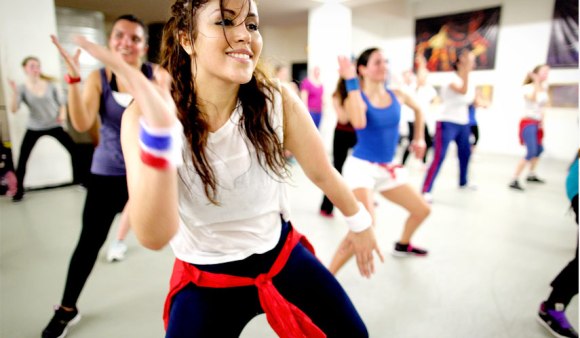
141 Dance- the oldest art form in the world, is not just an art anymore. Of late, dance is being reinvented in many ways, as calorie-burning frenzies of Zumbaaa, to treatment modalities attempting to retain some zing when age catches up with you in the form of Parkinson disease. This systematic review on Dance for people with Parkinson Disease found reasonably reliable preliminary evidence that people with mild to moderate disease receiving once weekly dance sessions showed “improvements in balance, motor impairment and endurance”. As with most exercises, the type of dance didn’t matter. What better article to start the New Year cheerfully.
158 Rehabilitation professionals still do not communicate effectively about cognition. The title says it all. This was a survey involving 130 rehabilitation professionals in the US, including physiatrists, nurses, occupational therapists, physical therapists, psychologists, social workers, speech-language pathologists. And they all just did not consistently agree on what they would term as mild, moderate, severe cognitive deficits, or on the types of memory (long term, short term, remote, recent, immediate, working). I believe we’ll fare no better. We still are not clearly identifying vegetative state from minimally-conscious-state from emerging-from-MCS. When different professionals talk different languages, patients suffer. The authors have a couple of suggestions to address this issue: “,,, use of a table embedded within clinical patient assessment reports that clearly states the definition of these terms and interpretations of the measures used. Periodic retraining of staff in regard to these issues will be necessary given staff turnover”. Amen.
Spinal Cord, January 2015
36 Does regular standing improve bowel function in people with SCI? “No” says this randomized cross over trial. 6-week stand phase (30 min per session on tilt-table, five times per week) and a 6-week no-stand phase separated by a 4-week washout period. Primary outcome was Time to First Stool. Why don’t we have more of such simple clinically relevant randomized studies.
78 What should you do to answer the million dollar question-whether catheters could be reused for clean intermittent catheterization? 1) Name the study after a Clint Eastwood movie whose theme music has been recycled in 498 Indian movies. Good. 2) Ask 61 athletes from 2012 London paralympics and 2013 paracycling world championships to fill a tick-box form. Not good enough. This survey data is rich in recall bias, and the authors cannot extrapolate information from this to emphatically state “catheter reuse is intimately linked to UTI frequency”. One good prospective, randomized trial might settle this issue. PG thesis, anyone?
International Journal of Epidemiology, January 2015
OL Master Health check-ups, such a waste of resources. IMMENSE waste. Ionnidis, who is as prolific in churning out papers on burning issues as Charlie Hebdo is in enlisting enemies, is at it again. Does screening for disease save lives in asymptomatic adults? This systematic review of meta-analyses and randomized trials says “No”. “Among currently available screening tests for diseases where death is a common outcome, reductions in disease-specific mortality are uncommon and reductions in all-cause mortality are very rare or non-existent.” Which means, it is time to read about lead-time-bias if you did not know already.
From the mainstream media
Amartya Sen goads us to dream the affordable dream of Universal Healthcare in his ‘The Guardian’ article. Sen argues why it makes sense for the state to provide healthcare for all even with seemingly empty coffers. “Plenty of evidence that not only does universal healthcare powerfully enhance the health of people, its rewards go well beyond health.” Let’s try and listen to him. The man has won some good silverware in money matters, he can’t be too wrong.
—
Liked on twitter: “Remember that patients’ time is a resource too” – from the ever resourceful Sir Muir Gray
 Rehab Journal Review