Tag Archives: Evidence based medicine

Ask not, it should be given

Shopping for monthly provisions is a great exercise in management. Before setting off, we go through the following stock-taking and planning motions, more or less:

  • what we have
  • what we don’t, and what we need
  • where to get from
  • how to get
  • budget
  • once done, have we got what we wanted

This goes on and on, every few weeks. Necessity drives some contingency purchases as well. When the same simple set of tasks is applied to nationwide health implementation, there are no answers. Disappointing is an understatement.

At the core are the twin issues: numbers that exist and that don’t. Rehabilitation services in India, as an extension of health care in general, have been traditionally provided to those who seek them. Paltry number of centers providing such services to over a billion people makes a mockery of all modern day healthcare targets. This gross mismatch places a huge burden on existing rehabilitation service providers and users, the people.

What make the matters worse is that currently there is hardly any scientifically sound nationwide data on any health condition, probably with the understandable exception of polio related statistics. It therefore is impossible to know the actual incidence and prevalence of most conditions that cause significant physical impairments. We do not know what we have, and hence cannot know what we don’t and what we need. This could render arbitrary all the healthcare policies of the state, since meaningful solutions cannot be planned for problems that are not fully defined and assessed. As a result, a high percentage of persons that would potentially benefit from a structured program never get a whiff of rehabilitation in their lifetime. And those that do get are those that are fortunate to know and access necessary resources.

If the system needs to become better, a few significant changes in the basic structure of healthcare and, as an extension, rehabilitation services might be in order. Those changes, which would need to be initiated and effected by each of us, as part of the community of healthcare professionals involved in this work.


Create National Registries

We need to get the numbers. Factual ones, not just the samples which are extrapolated, as is the current practice. From these real numbers would emanate epidemiological datasets that could serve as starting points for us to fathom the actual impact of health conditions and care provision (what we have). That could lead us to better decisions on priorities and interventions (what we need).


Generate useful evidence

Clinically relevant evidence comes by asking the right questions. The first step always should be to aggregate what the world already knows (literature review) about that question, and get the essence of the answer (the evidence base). If we need to enamor ourselves with knowledge of the available literature, we need to step outside of book-based learning, and engage in regular, critical reading of scientific literature, the right way. Not just going through abstracts and taking them for granted, but by questioning logically everything that comes our way.(1) Evidence is needed not as ready-made decisions, but as clinically relevant information that would help us make better decisions.


Guidelines for healthcare that are regularly updated

Based on evidence generated by us, of us, for us, there should be common-minimum care guidelines. These should not just mirror what the western world does; what works there might not/might work here. Also, the guidelines should direct us towards focusing interventions on outcomes that matter. Hard end points that mean something to the patients should take precedence over surrogate lab measurements. (2) What seems clinically appropriate may not be what the patients prefer. Let there be an end to treating the symptoms and signs. People should matter, not just what they come with. A corollary to this would be an end to one-size-fits-all type of treatment plans. The right type of guidelines are capable of inspiring changes even in deep rooted practices.(3) Key to implementation would be assigning justifiable accountability wherever necessary- including researchers, policymakers, healthcare professionals.


‘User’ to ‘Provider’ shift

Probably, the most important of all. The onus of provision of health needs should be on the provider, who by default should be the state. We should cease being content with the tunnel vision tradition of providing care to those who seek them.(4) Paraphrasing the fictional Albus Dumbledore, quality healthcare should be provided to  all who deserve it, not just to those who ask for it. Such an achievement would need a modern miracle in changing mindsets of all stakeholders- the people, everyone working in healthcare ‘industry’ (can there be a more derogatory term?), researchers, and policy makers. Such a welfare state model may have its own predicaments, but there are not many humane alternatives, are they? The ‘other’ model, inflationary insurance-driven healthcare (cue: USA) is not doing particularly well. The American healthcare dream has fizzled out to a (probably) never-ending nightmare, nobody having any idea what it would turn out to be.(5) The only worse thing we could do would be continuing to embrace inaction and maintaining current course.


Disclaimer Views expressed in this article are not solely mine, and they might just be plain wishful thinking.


Competing Interests: Notwithstanding what is written here, I hold a current subscription to an Indian health insurance scheme which I intend to continue for some time to come. No other competing interests.


References

  1. Lehman RS. Nullius in verba: Don’t take anyone’s word for it. Jama Intern Med. 2013 Jun 24;173(12):1049–50.
  2. Ioannidis JA. Appropriate vs clinically useful diagnostic tests. Jama Intern Med. 2013 Jul 22;-.
  3. Thornhill MH, Dayer MJ, Forde JM, Corey GR, Chu VH, Couper DJ, et al. Impact of the NICE guideline recommending cessation of antibiotic prophylaxis for prevention of infective endocarditis: before and after study. BMJ. 2011 May 3;342(may03 1):d2392–d2392.
  4. Gray JAM. The shift to personalised and population medicine. The Lancet. 2013 Jul;382(9888):200–1.
  5. Oberlander J. The Future of Obamacare. N Engl J Med. 2012;367(23):2165–7.
Tagged , , ,

The circus of research publication: Why you should be wary of mainstream media trumpeting ‘promising cures’

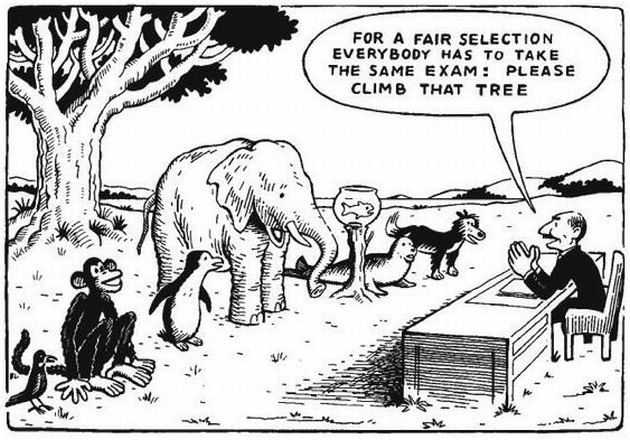
for-a-fair-selection-everybody-has-to-take-the-same-exam-please-climb-that-tree

 “Everybody is a genius. But if you judge a fish by its ability to climb a tree, it will live its whole life believing that it is stupid. What is your genius?”- Somebody

Is there a worse conflict-of-interest situation than that fires a majority of scientists, academicians, clinicians and researchers across the globe to publish research articles? I don’t think anything could beat the obscene and unscrupulous nexus between MSD, Srinivasan, BCCI and CSK.(1) The problem with the publication mania, though, is that it directly or indirectly affects every human being in the world.

For the perspective, I give you my own predicament. I am a clinician, and my primary job is clinical work. That means I need to see patients in the outpatient department, admit and manage those who need inpatient care, ensuring that as a doctor I do justice to all my patients in a manner that is as scientific as possible. So, what do you think would be the single most important metric that is used to assess my performance to grant me my promotion next year? Surprise! It’s not what I do to my patients. That is almost irrelevant in the current system of objective appraisals. I would get my promotion ONLY if I have at least one publication in a good scientific journal as a first or second author. And to get my next two promotions, I should have at least 6 publications in the next 7 years. I could be good, or pathetic, with my patients. What matters though is the ‘count‘ of the publications I have. That’s right. Not the quality or impact, but the numbers. It’s a shame that is the way many like me would be assessed, but THAT is the rule. Do read the opening sentence again to see who is for company.

Almost every decision made by doctors in treating illnesses is supposed to be based on research findings. It therefore becomes crucial to consider every research article in light of this coercive professionalism, where many publish not because they have something to publish, but because they have to publish something. ‘Publish or perish’, is the terminator-esque phrase used to refer to this academic pressure. And it is this one factor that leads people to conduct and publish research on things unlikely to contribute to a better healthcare. When the choice is between what is easy and what is right, it is difficult for many to forego the first option.  Big pharma influencing, often not legitimately, every aspect of research, marketing and sales, and regulators turning a blind eye to everything that is happening only adds to the seemingly utter wretchedness of the scenario. (2)  I don’t believe things are actually as bad as what a prominent researcher says in a heavily cited ‘research on research’ article: Why Most Published Research Findings Are False.(3) It may not be the 90% that he claims, but even a conservative estimate of 25% of bad research findings would mean that a significant number of treatments in the world are not scientific enough. In this age, it is no less than criminal negligence. Unfortunately, most people uninvolved in this business are either ignorant or indifferent to the issue.

So, how do we actually get to know what treatment works and what not? Or, whether an intervention causes more good than harm in the balance? Thankfully, in these troubled waters, in an attempt to ensure that we fall not to individual indiscretions but to collective ones, there is a consensus system to rate the strength of available scientific evidence. The table can be found here as given in the website of the Center for Evidence Based Medicine.(4) Translating to human parlance, at the risk of oversimplification, in the order of strongest to worst scientific evidence, bet your life on it if it is a properly done:

  1. Systematic Review

As the name suggests, systematically analyzing all previously done good quality studies evaluating one particular treatment

  1. Randomized controlled trial.

Abbreviated as RCT, this is the best study design in general to evaluate the efficacy of an intervention. Every new intervention is studied in different phases. Phases 0 and 1 just test the waters. Phase 2 studies are the ones that actually check if the treatment is effective or not. If yes, Phase 3 studies are done to fine tune dosing and side-effect profile, and then the intervention is marketed pending regulator approvals. It might be worth noting that none of the so-called stem cell treatments have so far gone beyond phase 1 or 2, but they do get published. And get trumpeted as if they are beyond phase 3 and ready for marketing.

  1. Case controlled study or Cohort study (when it is not possible or ethical to do an RCT)

Now for the bad ones. Put your money elsewhere if it is a

  1. Case series or case report.
  2. Expert opinion. This includes ‘opinions’ from an esteemed scientist, your professor, favorite doctor, best-selling book author, magazine columnist, vociferous blogger, peer, friend, spouse, me- personal opinions are the least dependable, and are considered next to nothing in terms of scientific evidence. Unscientifically clustered personal opinions of many people are no better either, not unlike democracy that often facilitates unanimity of choice that beggars belief.

In the backdrop of professional compulsions, technical complexities of doing good quality research, and big pharma corrupting whatever they can to sell their products, throw into the mix mainstream media willing to stoop however low to grab a share of followers and ratings to boost their earnings, you have the picture complete. Attention-mongering headlines, at times absurd, might be catchy, with nothing more to them in reality. Need a sample? BBC News – Stroke stem cell trial shows promise.(5) In the larger scheme of things, most research reported by non-scientific general media is not ready for human consumption. The articles are out there to serve the personal interests of someone somewhere, and definitely are not messengers of better health for the end-users: you, and me.

References:

  1. ET bureau. MS Dhoni facing a flurry of bouncers for CSK conflict. The Economic Times [Internet]. 2014 Mar 28 [cited 2014 Jun 11]; Available from: http://articles.economictimes.indiatimes.com/2014-03-28/news/48662904_1_ms-dhoni-mahendra-singh-dhoni-arun-pandey
  2. Goldacre B. Bad Pharma: How Drug Companies Mislead Doctors and Harm Patients. Reprint edition. Faber & Faber; 2013. 448 p.
  3. Ioannidis JPA. Why Most Published Research Findings Are False. PLoS Med [Internet]. 2005 Aug [cited 2014 Jun 10];2(8). Available from: http://www.ncbi.nlm.nih.gov/pmc/articles/PMC1182327/
  4. Levels of Evidence 1 [Internet]. 2013 [cited 2014 Jun 10]. Available from: http://www.cebm.net/index.aspx?o=1025
  5. Stroke stem cell trial shows promise [Internet]. BBC News. [cited 2014 Jun 10]. Available from: http://www.bbc.co.uk/news/science-environment-22678144
Tagged , , , , , , , , , , , , ,